Local restoration referrals · Gold Coast, QLD
Water damage restoration, Gold Coast
Burst pipe, storm leak or wet carpet? Tell us what's happening and we'll connect you with an independent restoration business that works in your suburb.
Calls answered 24/7 by our virtual assistant
Get the water out. Understand what comes next.
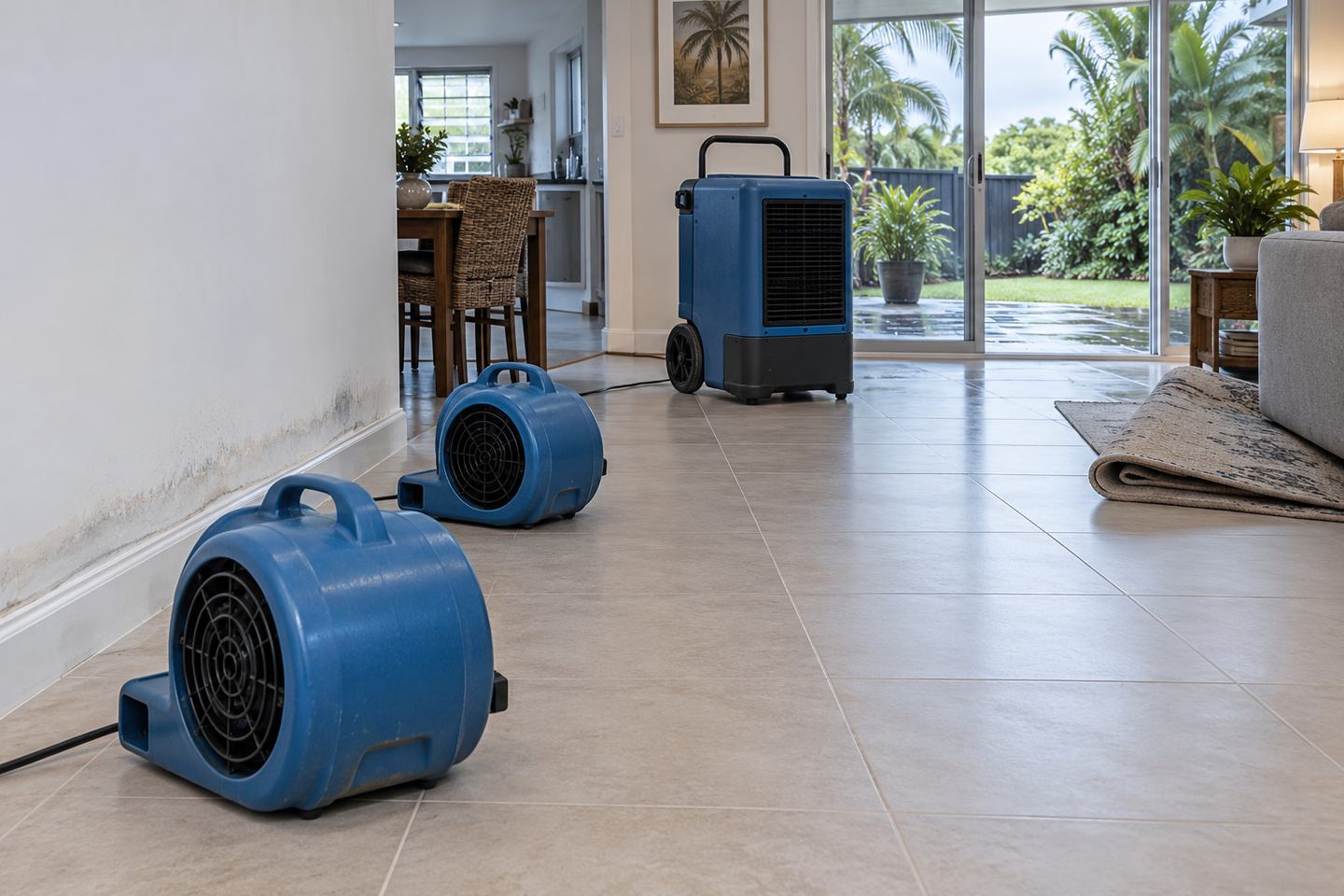
Water damage needs to dry fast. Queensland Health says carpets waterlogged for more than two days may need to be removed, and wet conditions let mould grow. Make it safe first: if water has got into the house, leave the power off until an electrician has checked it, and if a pipe has burst, turn the water off at the mains stop valve. Photograph the damage before you clean up. If you're insured, the Insurance Council says to speak to your insurer before you authorise any work, including emergency repairs, and to get their permission in writing. A restoration business pumps out the water, dries the building with air movers and dehumidifiers, and checks for moisture you can't see. Fixing the pipe itself is a job for a licensed plumber. With your permission, we pass your details to one local restoration business, and they call you back.
Find the situation that matches yours
What happens after you enquire
- Tell us what happened
- Share your suburb, the source of the water if you know it, and which rooms are affected. Mention any immediate hazards.
- One business, with your permission
- We pass your enquiry to one independent local restoration business. Calls are answered by our virtual assistant; an on-site visit is arranged with the business.
- Agree on the next step
- Ask about availability, assessment fees and the scope of work. The business quotes you directly. If you are insured, check with your insurer before authorising work.
The first 48 hours
Start these steps as soon as it is safe. The time marks are reminders, not waiting periods or a promise of when a business can attend.
- 0 h
Make safety the first step
If water has got into the house, don't turn the power back on until an electrician has checked it. If a pipe has burst, turn the water off at the mains stop valve if you can do it safely (RACV). If anyone is in danger, call triple zero (000).
Insurance Council of Australia - Now
Photograph it, then call your insurer
Take photos and video of the damage before you start cleaning up. Don't throw out anything that could be repaired, unless it's a health risk. Speak to your insurer before you authorise any work, including emergency repairs, and ask for their permission in writing.
Insurance Council of Australia - Now
Stop more water getting in
For storm or flood damage you can't make safe yourself, such as a badly damaged roof, the SES takes flood and storm emergency requests on 132 500. If you rent, tell your property manager: a burst water service, a serious roof leak and flooding are all emergency repairs (RTA).
Queensland Government, SES - 48 h
Don't wait two days to start drying
Open doors and windows if it is safe to help dry the house. Carpets that have been waterlogged for more than two days may need to be removed, and mould grows in wet conditions. If it's still wet, get help drying it.
Queensland Health
What happened, and what it usually means
- A burst pipe
- Turn the water off at the mains stop valve. The pipe repair is plumbing work, which needs a licensed plumber. Home insurance usually covers the damage the water caused, but not fixing the pipe that leaked (CHOICE).
- Water coming through the ceiling
- Usually a roof leak in a storm, or a leaking pipe, shower or appliance in the unit above. Keep clear of light fittings and leave the power off until an electrician has checked it.
- Wet carpet
- The clock is running. Carpet that stays waterlogged for more than two days may need to be removed. See wet carpet drying.
- Water came in during a storm or flood
- Call your insurer before any work starts. For emergency help with storm or flood damage, call the SES on 132 500.
- A stain or soft patch that keeps spreading
- Often a slow, hidden leak in a wall, floor or shower. Check your policy: some insurers exclude gradual leaks completely (CHOICE).
- Mould appearing weeks later
- Mould follows water that didn't dry. Don't dry-brush it, which can spread spores. See mould removal.
How it works
You call or send the form
Calls answered 24/7 by our virtual assistant. The assistant asks what's happening, where, and how urgent it is.
You say yes to sharing your details
We only pass your details on with your permission, and only to one restoration business.
A local restoration business calls you
An independent restoration business working in your suburb calls you back to talk about the job and the price.
Why water gets in on the Gold Coast
The storm season is long
The Bureau of Meteorology says October to April is the peak time for storms, tropical cyclones and floods across Queensland. Severe thunderstorm risk is highest from October to December.
Canals and storm tide
There are 400 kilometres of canals on the Gold Coast. Before Cyclone Alfred, City modelling suggested flooding and storm surge could affect more than 6,000 properties.
Cyclone Alfred, March 2025
The Insurance Council declared an insurance catastrophe for south-east Queensland and northern New South Wales on 9 March 2025. By midday on 10 March there were more than 9,000 claims, with the impacts most significant on the Gold Coast, in Brisbane, Hervey Bay and the Northern Rivers.
About half the city is mapped for flood risk
The City's November 2022 flood mapping put about 173,000 properties at low to high flood risk in a worst-case scenario: about half of the Gold Coast's 275,000 properties.
If you’re insured, ask your insurer first
Insurers often prefer to manage repairs themselves, through their own suppliers (ASIC). Suncorp, for example, says it can organise a builder from its supplier network to do emergency repairs, or cash settle if you’d rather use your own (Suncorp).
So call your insurer before you agree to any work, including emergency drying, and get their answer in writing. If they’re happy for you to use a business of your choice, we can connect you with one. If the damage is under your excess, or you’re not insured, you can call a restoration business straight away.
Burst pipes
Turn the water off at the mains stop valve. Then two different jobs need doing. A licensed plumber fixes the pipe, and a restoration business dries out what the water reached.
On the Gold Coast, the pipes and fittings on your side of the water meter are yours to maintain. If a concealed underground leak has pushed up your water bill, the City may give relief when a licensed plumber has repaired it within a month and at least 50 kilolitres were lost. Apply within three months (City of Gold Coast).
Storms and roofs
Queensland’s cyclone season officially runs from 1 November to 30 April, but cyclones can come at other times (Get Ready Queensland). When a storm opens up a roof, the first job is to stop more water getting in. The SES takes flood and storm emergency requests on 132 500 (Queensland Government). The drying can start once the roof is covered.
Floods and storm tide
Storm tide can reach places that might otherwise have been safe, and it’s worst when the surge arrives on top of a high tide (Get Ready Queensland). The City publishes flood maps for awareness, insurance and flood depth, but says they shouldn’t be relied on during an event (City of Gold Coast). Follow official warnings.
After floodwater has been through a house, don’t turn the electricity on until an electrician has inspected it (Insurance Council).
Sewage in the house
Keep children and pets away from it. If sewage is overflowing from a manhole in the street, report it to the City of Gold Coast on 1300 GOLDCOAST (1300 465 326), 24 hours a day (City of Gold Coast). Inside the house, a restoration business can clean, sanitise and dry the affected areas and tell you what can be saved.
Renters, landlords and strata
If you rent, tell your property manager or landlord straight away. Flooding, a burst water service and a serious roof leak are emergency repairs, and the tenancy agreement names a repairer for them (RTA).
In a unit, the body corporate’s insurance may be involved. If the body corporate claims because your lot was damaged by water from a leak in your lot, you would normally pay the excess (Queensland Government).
Drying out
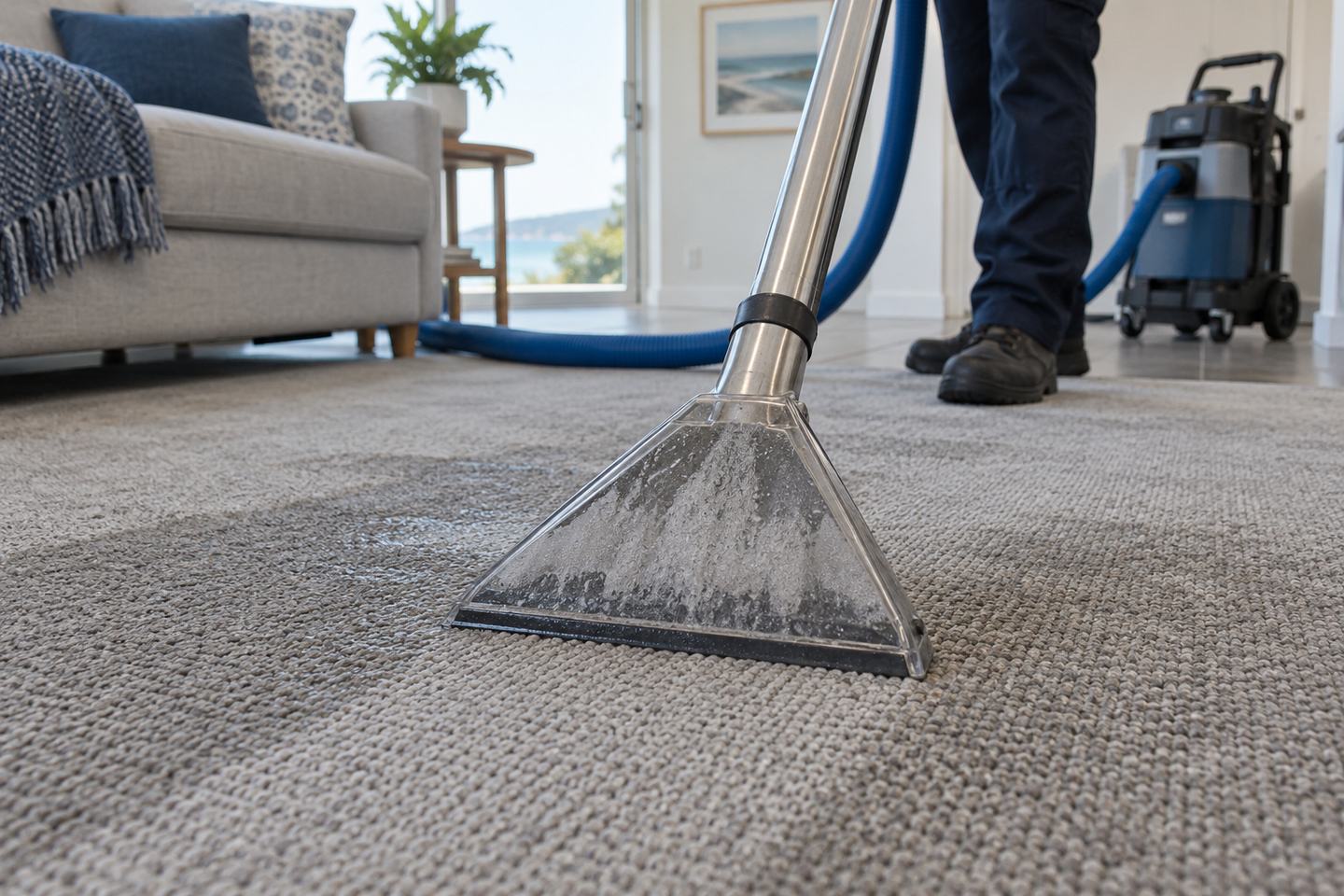
Open doors and windows if it’s safe. Lift rugs, and move furniture off wet carpet. Queensland Health says carpets waterlogged for more than two days may need to be removed, so speed matters (Queensland Health).
A restoration business measures where the moisture has gone, including inside walls and under floors. Then it dries the building with air movers and dehumidifiers until the readings are back to normal. Ask them to explain the readings as they go.
Suburbs we cover
Local restoration businesses across the City of Gold Coast area. Pick your suburb for local details.
Questions people ask
Will my home insurance cover water damage?
It depends on your policy. Cover for a sudden leak or burst pipe usually pays for the damage the water caused, but not for fixing the pipe or appliance that leaked, and some insurers exclude gradual leaks completely (CHOICE). Ask your insurer before any work starts.
If I'm insured, can I choose my own restoration business?
Insurers often prefer to manage repairs through their own suppliers (ASIC). If you want to use your own tradespeople, the Insurance Council says your insurer will consider a request to cash settle your claim (Insurance Council). Ask before you agree to anything.
How much does water damage restoration cost?
It depends on how much is wet, for how long, and whether the water was clean, from a storm, or sewage. The restoration business quotes after it has seen the damage. We don't set prices.
I rent. Who do I call?
Your property manager or landlord first. A burst water service, a serious roof leak and flooding are emergency repairs, and your tenancy agreement names a repairer for them (RTA).
I own a unit. Who pays for water damage?
If the body corporate claims on its insurance because your lot was damaged by water from a leak in your lot, you would normally pay the excess (Queensland Government). Talk to your body corporate manager.
What should I check about the business that calls me?
Ask about their training and their insurance. Some technicians hold IICRC certification, an industry certification you can search on the IICRC website. Building repairs worth more than $3,300 need a QBCC licence, and so does any plumbing (QBCC).
Are you the council, or a restoration company?
Neither. Gold Coast Water Damage is a referral service. We're not connected with the City of Gold Coast. With your permission, we pass your details to one independent restoration business that works in your area, and you deal with them directly. See our referral marketing disclosure.
Water in the house? Talk to a local restoration business.
- Local restoration businesses
- Your details go to one business, only with your permission
- No charge to you for the referral