Why mould follows water damage
Mould needs moisture. Queensland Health says wet conditions and heavy rainfall create an environment where mould can grow, and the first defence is drying the home quickly (Queensland Health). That’s why mould often shows up weeks after a leak, a burst pipe or a storm: something stayed wet.
So removing mould is only half the job. If the water source is still there, a slow leak in a wall or a shower, or damp under a floor, the mould comes back.
Small patches you can clean yourself
On hard surfaces, Queensland Health’s advice is to clean with a mould product, household detergent or white vinegar, and never to mix vinegar with bleach. Wear rubber gloves, safety goggles, a P2 face mask, protective clothing and enclosed shoes. Don’t use a dry brush: it can release spores into the air.
When to call a professional
- It’s on porous materials. Plasterboard, carpet, underlay, ceiling panels and soft furnishings soak it up. Queensland Health says bleach may not work on porous surfaces.
- It keeps coming back. There’s moisture you haven’t found.
- It’s spread across a room, or into a wall or ceiling cavity.
- It followed a flood or a big leak. The building may still be wet behind the surfaces you can see.
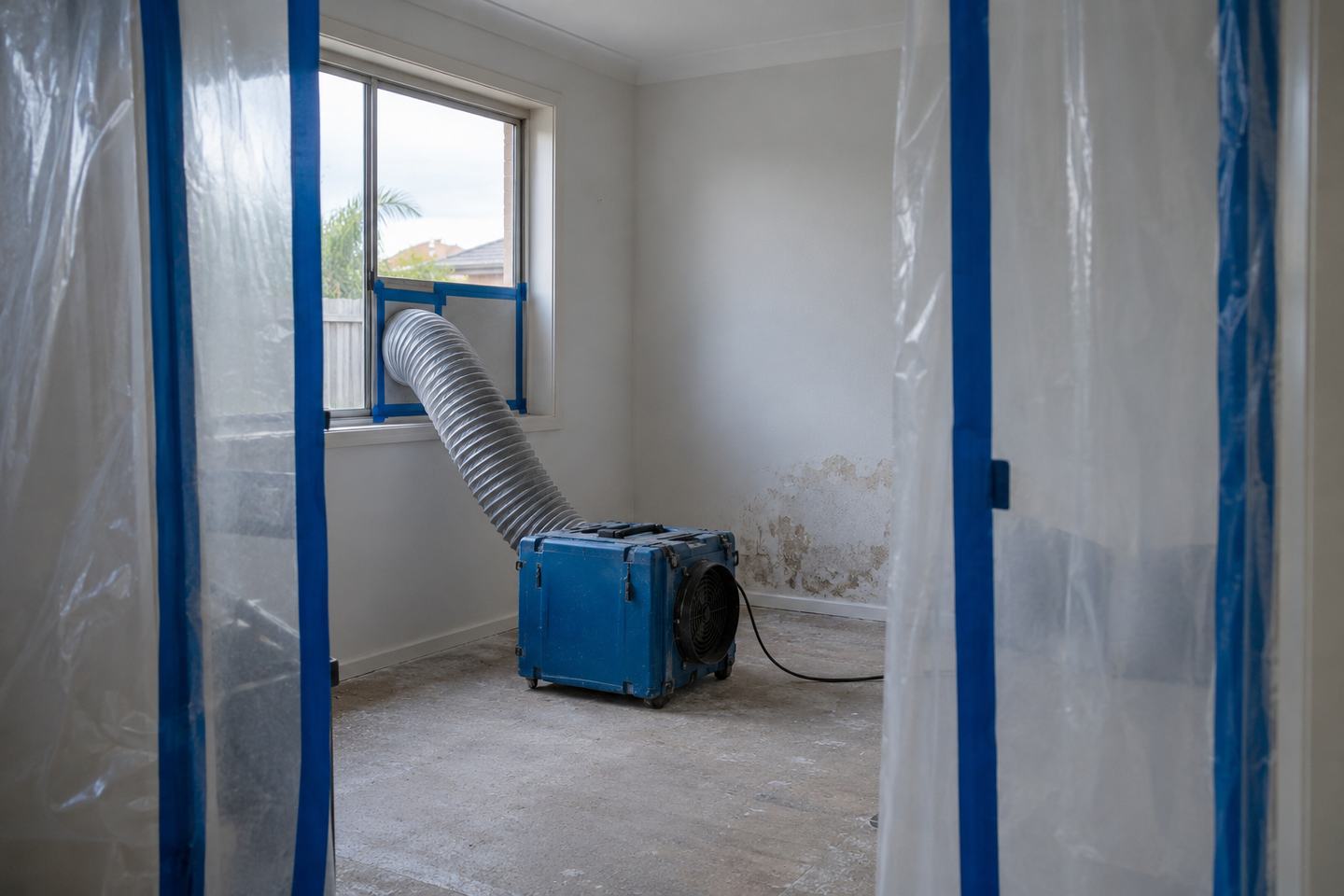
A mould removal business looks for the moisture first, contains the area so spores don’t spread, removes what can’t be cleaned, cleans the rest, and dries the building. Ask what they plan to remove before they start.
Mould inspection and testing
Some businesses offer inspections and testing before any removal. Ask what they’ll measure, where, and what the report will tell you. A good report should explain where the moisture is coming from, not only that mould is present.
If you rent
Tell your property manager or landlord in writing, with photos, and say when you first noticed it. If the mould followed a burst pipe, a roof leak or flooding, those are emergency repairs, and your tenancy agreement names who to contact (RTA).
Ask how the moisture will be checked
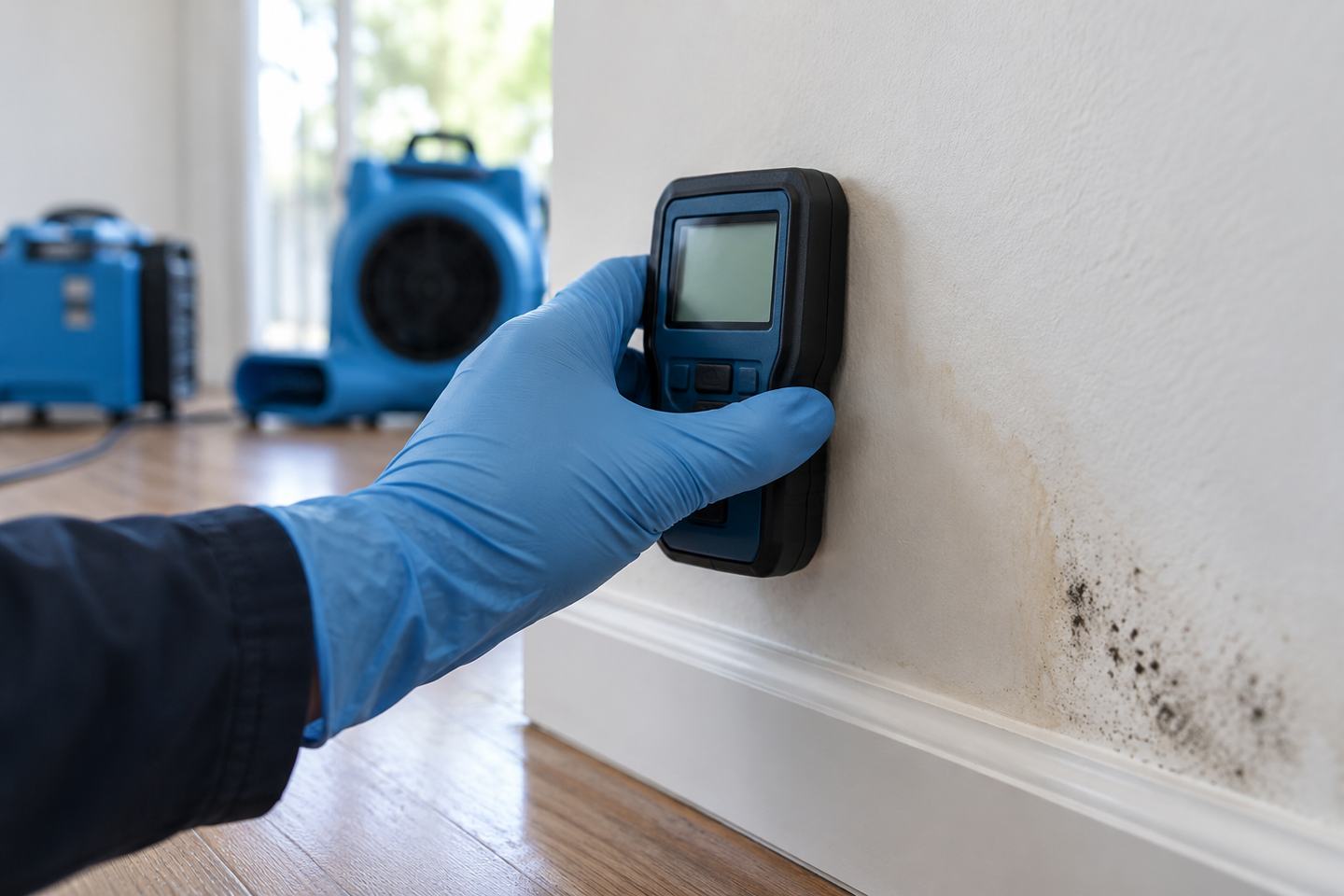
Ask the restoration business where they will take moisture readings, how they will find the water source, and what their written assessment includes. The right scope depends on your property.
Ask about your property